

The Agentic Firm: The Rise of AI-Native Professional Services

Thesis: The biggest AI companies of the next decade won’t start as “software companies.” They’ll start as AI native professional services firms that do the work, harvest the telemetry, and gradually productize the workflow—until the service behaves like software.
This is our first attempt at articulating a thesis we’ve been developing internally for a long time. We also have direct experience working with portfolio companies like Sookti and closely observing other firms like Crosby. More will follow as we refine our thinking.
The Great Unbundling of Human Expertise
Traditional professional services firms are structurally incapable of disrupting themselves. It’s not a failure of vision or talent - it’s a fundamental misalignment of incentives that makes innovation impossible.
Consider the anatomy of a typical firm: Most are structured as partnerships or LLCs, designed to maximize profit distribution to partners rather than reinvest in R&D. They don’t build products because they literally can’t - their organizational structure is optimized for extracting value, not creating it. When your compensation model rewards billable hours and your path to partnership depends on building a book of business, why would you ever automate yourself out of existence?
The hourly billing model isn’t just a pricing mechanism - it’s the golden goose that defines the entire culture. Every attempt at automation is viewed through the lens of “will this reduce our billable hours?” The answer is always yes, which means the innovation always dies. Partners who’ve spent decades climbing the ladder by maximizing their billing rates aren’t going to champion technology that makes their expertise commoditized. They’ll buy software to make their juniors more efficient, sure, but never to replace them.
This is why McKinsey will never build the AI consulting firm. Why Big Law won’t create the autonomous legal department. Why the Big Four won’t spawn the AI accounting firm. They’re structurally, culturally, and economically incapable of cannibalizing their core business model.
But here’s what makes this moment different: These firms are sitting on goldmines of data they don’t even realize they have. Decades of documents that have never been properly indexed. Terabytes of contracts, analyses, and reports that represent patterns waiting to be extracted. The tribal knowledge locked in partners’ heads - their heuristic models for risk assessment, their intuition about deal structures, their pattern recognition from thousands of transactions - isn’t mystical wisdom. It’s a probabilistic decision engine that’s never been quantified.
The “senior partner gut feel” that commands million-dollar fees? It’s really just pattern matching across thousands of data points, weighted by experience and refined by outcomes. The “expertise” that takes 20 years to develop? It’s largely document extraction and synthesis, applying frameworks that have been refined but rarely codified, making decisions based on precedent and analogy that could be mapped to a decision tree.
This is why we need entirely new firms - Agentic Firms - built from the ground up with different DNA. Firms that are structured as C-corps, not partnerships, because they’re building technology assets, not just billing hours. Firms where the culture celebrates automation, not fears it. Firms that see every document as training data, every decision as a labeling opportunity, every client interaction as a chance to improve the model.
The revolution won’t come from within. It can’t. It will come from new entrants who understand that professional services isn’t about the professionals - it’s about the systematic application of expertise at scale. And for the first time in history, we have the technology to extract, encode, and deploy that expertise without the humans who traditionally carried it.
Enter the Agentic Firm
This is the opening for a new category: The Agentic Firm - AI-native professional services companies that don’t just augment human consultants but fundamentally reimagine how expertise is delivered through autonomous agents. These aren’t traditional firms with AI tools bolted on. They’re entirely new organisms, built from first principles around the idea that professional services can be unbundled, encoded, and delivered by AI agents.
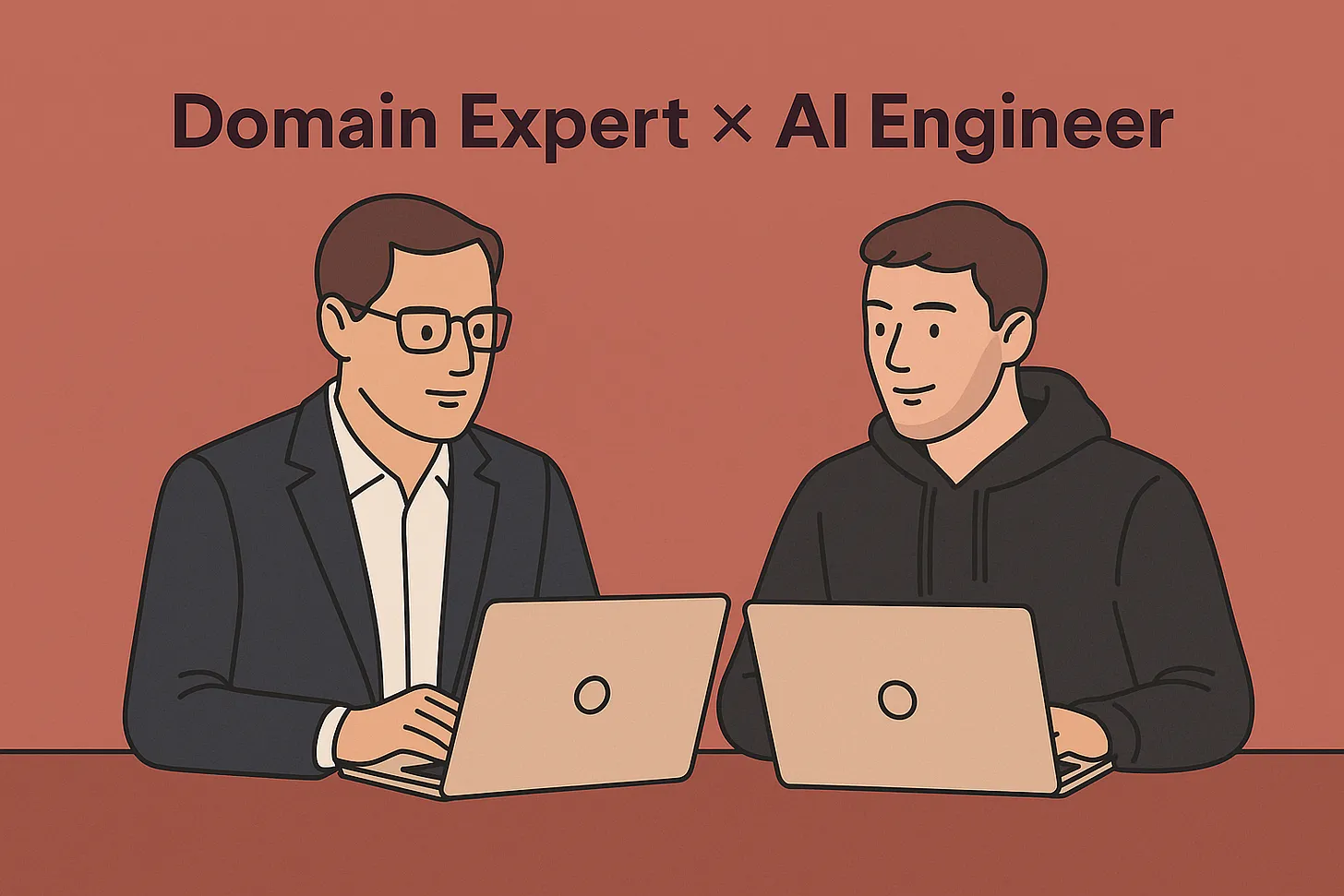
The Agentic Firm doesn’t have partners climbing billable hour pyramids. It has domain experts and AI engineers working together to encode expertise into systems. It doesn’t fear automation - automation is the entire point. Every client interaction makes the system smarter, every document processed improves the model, every decision logged becomes training data for the next one.
The Playbook: How to Build an Agentic Firm
Through our work with portfolio companies and observing others, we’ve identified some of the core elements that make these AI-native professional services companies successful:
1. Mission statement: Replace, Don’t Augment
Don’t hide behind the technology. Call yourself what you are replacing: an AI law firm, an AI consulting firm, an AI accounting firm. Your agents aren’t tools for professionals; they ARE the professionals. This isn’t about building copilots - it’s about building the pilots themselves. Your mission statement should reflect this boldness.
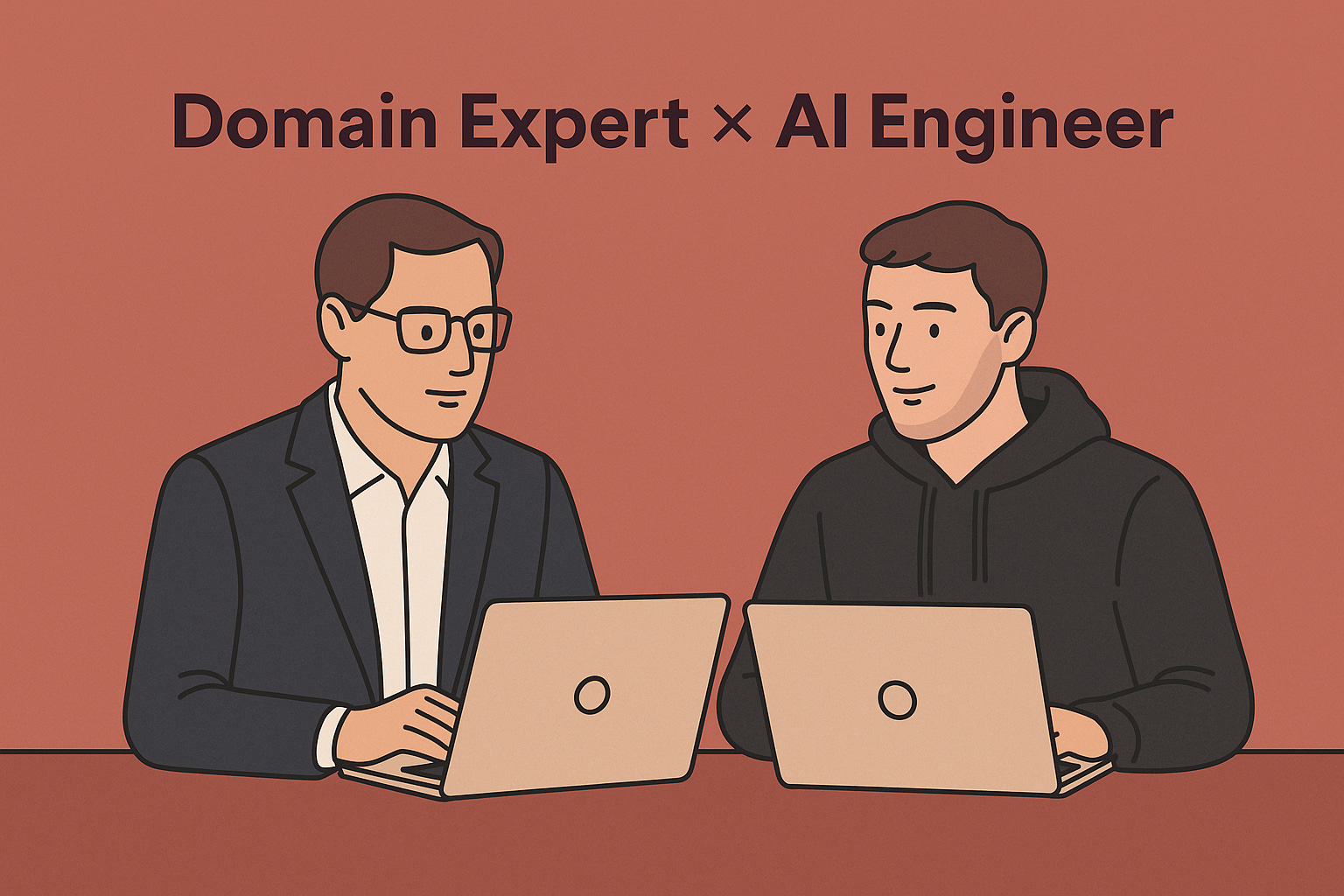
2. The Pair Programming Model: Domain expert * AI Engineer
The secret sauce isn’t pure automation - it’s domain expert × AI engineer collaboration. You need people who deeply understand the nuances of system of record migration or financial modeling working hand-in-hand with engineers who can translate that expertise into scalable systems. This isn’t about replacing experts; it’s about encoding their expertise.
3. Reimagined Pricing That Aligns Incentives: The billable hour is dead
When your marginal cost of delivery approaches zero, time-based billing becomes absurd. Instead, price by outcome: by the document, by the transaction, by the analysis. This forces you to optimize for what clients actually care about - speed and quality - not how many hours you can bill.
4. Context Engineering as Competitive Moat: Fine tuned models, Evals, prompt engineering is everything
Foundation models will keep improving with open-source datasets, but they’ll never have access to your customers’ proprietary data. Context engineering - the ability to load relevant memory, past actions, and customer-specific knowledge into every interaction - becomes your true defensible advantage. This isn’t just RAG; it’s building a living, breathing institutional fine tuned model that gets smarter with every client interaction.
5. Obsessive Focus on SLAs: Both Internal and External
- External SLAs: What clients care about (for ex: turnaround time, accuracy, number of contract revision cycles)
- Internal SLAs: What drives your economics (when to escalate to human review, automation rates, resolution times)
Track it, optimize it, and publish benchmarks.
6. The Alignment Dilemma: RLHF vs Customer Specific Fine Tuned models
Foundation model companies are pouring billions into reinforcement learning from generic human feedback, but that’s wont cut it when you are building an AI native services firm. Your enterprise client doesn’t need a model that works for everyone - they need a model that thinks like their best partner, applies their risk tolerance, and embodies their institutional knowledge.
The strategic question: Should you build industry-specific models or customer-specific ones? The answer depends on your ACV (Annual Contract Value).
For high-ACV enterprise clients (think Fortune 500), you should be doing:
- Per-customer fine-tuning: Train on their specific documents, decisions, and precedents
- Per-customer evals: Test against their unique quality bars and edge cases
- Per-customer prompts: Encode their specific policies, preferences, and decision frameworks
- Per-customer RL: Align the model to how their specific experts would make decisions
This level of customization is expensive but justified when you’re charging six or seven figures annually. You’re essentially building a digital twin of their best professionals.
For everyone else, vertical-specific models suffice - a general legal model, a general accounting model. But even these should be more specialized than foundation models.
The key insight: Foundation models will never reach the capability you need because the bitter lesson of scaling doesn’t apply when the critical data is locked in private vaults. OpenAI can’t train on your client’s proprietary contracts. Anthropic doesn’t have access to your customer’s decision history. This data moat, combined with customer-specific alignment, becomes your defensible advantage.
7. Interfaces That Feel Human: An Intentional choice
Even with 99% automation, knowing when to inject human expertise is critical. This isn’t a failure of AI; it’s a feature. Clients need to trust the output, and strategic human touchpoints - especially for high-stakes decisions - build that trust. The art is making these interventions feel seamless, not like a handoff between systems.
The best AI services feel like working with a talented colleague, not a chatbot. Think Slack integrations where you just tag the service and get work done. No complex UIs, no learning curves - just natural communication that fits existing workflows.
8. Organizational Culture: Applied Research
Your organization needs to blend AI researchers with domain experts in a culture of constant experimentation. This isn’t about publishing papers; it’s about applied research - taking cutting-edge capabilities and figuring out how to deploy them in production for real client problems.
Agentic firms aren’t built overnight - They’re built one role at a time
Agentic Firms shouldn’t try and automate entire organizations at once. They should pick one role - say junior ABAP engineer or a paralegal - and relentlessly perfect that agent. Once that agent is indistinguishable from (or better than) its human counterpart, they move up the chain. Today’s paralegal agent becomes tomorrow’s senior associate agent, eventually working its way to partner-level decisions.
This incremental approach serves two purposes: it allows for continuous refinement based on real-world feedback, and it doesn’t trigger the organizational antibodies that come with wholesale transformation.
Our Bet
We believe the next decade will see the emergence of Agentic Firms - AI-native professional services companies where autonomous agents deliver expertise with the consistency of software, the scalability of platforms, and the judgment of the best human practitioners. These won’t just be tools for professionals; they’ll be the professional services firms themselves, staffed by agents and augmented with humans.
Come build the future along with us.


